
When you think of Japanese music, what kind of image comes to mind? Some people may think of the latest hits by popular Japanese artists, while others may think of traditional music like gagaku.
Here we will introduce the history, traditions, and characteristics of Japanese music from the ancient, medieval, modern, and contemporary periods.
Ancient Japanese Music
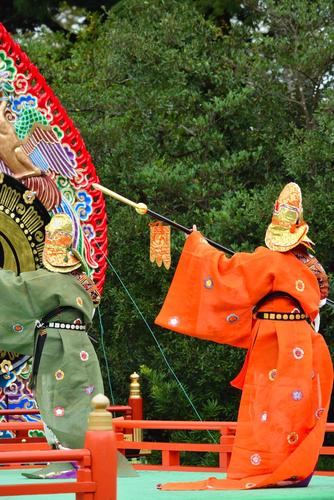
Let's start by looking at ancient Japanese music. What kind of music did our distant ancestors play and listen to?
Importing foreign music
Around the time that Japan was established as a Yamato government, ties with China and the Korean Peninsula began to be seen. It was around this time that foreign music is said to have been introduced to Japan. Korean music was introduced first, followed by Chinese music.
Characteristics of each era
Next, let's take a look at the characteristics of ancient Japanese music by rough era.
During the reign of Empress Suiko in the 7th century, gigaku music was introduced from Baekje, followed by Linyugaku, music from what is now southern Vietnam, in the 8th century. In the early Heian period, Bohai music was introduced from China.
With the exception of gigaku, these types of music have been passed down as gagaku, performed at the Imperial Court and other venues.
Also, from the Heian period onwards, "new songs from the Heian period" that were closer to foreign music began to appear. In the mid-Heian period, songs known as Imayo appeared. Imayo became very popular towards the end of the Heian period, and there were many masters of Imayo among Shirabyoshi and other performers.
Medieval Japanese Music
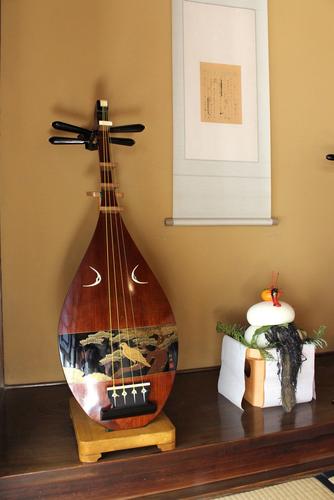
Now let's take a look at medieval Japanese music.
Biwagaku: A general term for music played on the biwa
In the Middle Ages, biwa music, which uses the biwa, appeared. Biwa music is a general term for music and narratives that use the biwa as an instrument. The main types of biwa music include the blind monk's biwa, the Heike biwa, the Chikuzen biwa, and the Satsuma biwa.
Characteristics of Medieval Japanese Music
Medieval Japanese music includes Heikyoku, Noh plays, Noh plays, and Kabuki dance.
Heikyoku is a musical piece that tells the Tale of the Heike accompanied by the Heike biwa, and was spread by blind monks who wandered from country to country.
Yokyoku emerged in the Middle Ages and Muromachi period. Zeami created Yokyoku by looking at the lyrics of Noh theater from a musical perspective.
Among the forms of Noh, the most famous as medieval music are Sarugaku Noh and Dengaku Noh. Dengaku is said to be a combination of the rice-planting ritual dance Denmai and acrobatic arts introduced from China. In contrast, Sarugaku Noh can be considered another name for modern Noh, and is a combination of Sarugaku (comical impersonation) with Shirabyoshi dance and Imayo.
Kabuki dance appeared in the late Middle Ages. Izumo no Okuni, who appears in Japanese history, was a master of this dance. It is said that Kabuki dance was a further development of the Nembutsu dance that existed up until then.
Modern and contemporary Japanese music
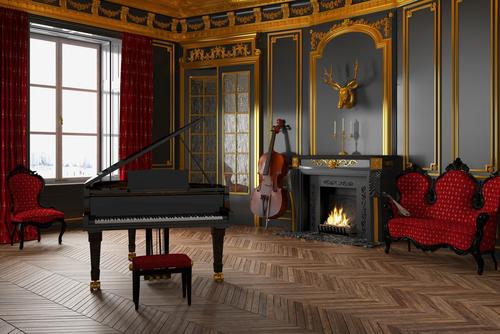
Finally, we will introduce modern and contemporary Japanese music.
How did the import of Western music change Japanese music?
Until the Middle Ages, Japanese music was heavily influenced by Asia, even though it was overseas. However, after the Meiji Restoration, Western music, mainly from Europe, began to be introduced to Japan. As a result, music education in Japan also began to be based on European classical music.
Until then, Japanese music consisted mostly of rakugo and gidayu sung in the natural voice, but the situation began to change dramatically as the natural voice was considered to be unattractive in Western music.
However, after World War II, music that mixed Western and Japanese music began to appear.
This style of music is known as "modern Japanese music."
The origin of "Hogaku"
"Hogaku" generally refers to traditional Japanese music. The types of "Hogaku" are extremely diverse, and many music dictionaries define it as "a general term for Japanese music excluding the music of the Ainu people of Hokkaido and Okinawa."
After the Meiji period, Western music became mainstream for a time, and Japanese music became distant from the public.
However, with the boom in "contemporary Japanese music" and the "new wave of Japanese music" that began in the 1990s, attention began to be drawn to "Japanese music" again.
It can be said that Japan's music education policy has undergone major changes, such as the requirement to teach Japanese musical instruments in junior high school music classes since 2002.
summary
Japanese music has taken on a very different form in each era: ancient, medieval, modern, and contemporary. In ancient times, music from the Korean Peninsula, China, and Vietnam was introduced, and Japanese gagaku (Japanese court music) was formed. In the Middle Ages, biwa music, which uses the biwa, appeared, and storytelling stories such as the Tale of the Heike spread throughout the country by blind monks and others. It was also around this time that noh and kabuki dance appeared, although in a different form from today.
In the modern era, the environment surrounding Japanese music changed dramatically with the introduction of Western music from Europe and other places. For a time, "Japanese music" in the broad sense of the word completely disappeared, but as time passed, it began to attract attention again.
Historically, Japanese music has been heavily influenced by both the East and the West, so having a deep understanding of this genre will surely be useful when you become a Japanese language teacher!
This article was originally published in Nihongo Biyori and has been partially re-edited by KARUTA.